
Stronger concrete. Fewer weeks. Safer sites.
SteelX 5:25 gives you stronger concrete, a shorter program and a safer work site — twisted steel reinforcement that replaces mesh and conventional rebar across slabs, footings, walls and shotcrete.

Twisted steel rebar. Not steel fibre.
Every strand bonds to the concrete matrix over its full length and must untwist to pull out. That single difference is what lets engineers design with it like rebar — and what takes the mesh, the cages and the weeks off your site.
Freedom from joints
The SteelX Liberty™ jointless slab system removes the need for saw-cut joints while reducing slab thickness by 20%. Construction joints are governed by what can safely be poured and finished — not by restraint or typical joint spacing.
by design
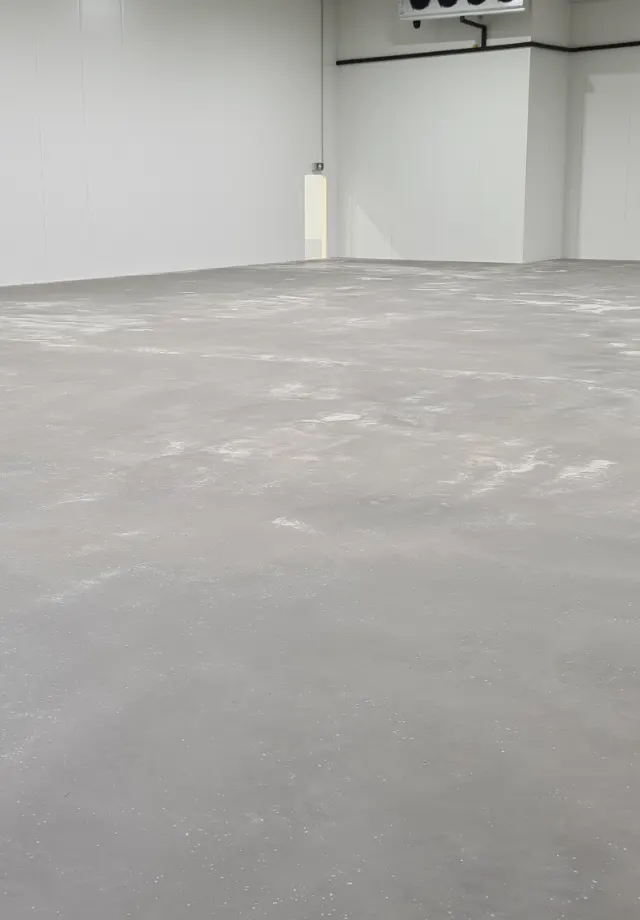
Where SteelX replaces steel
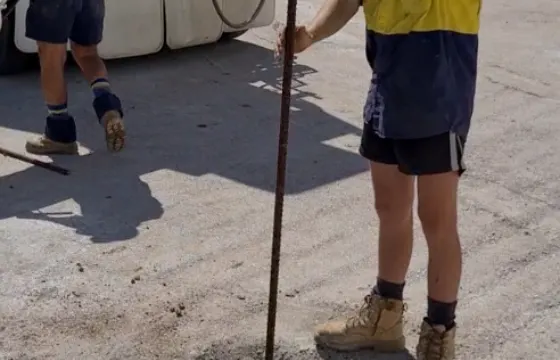
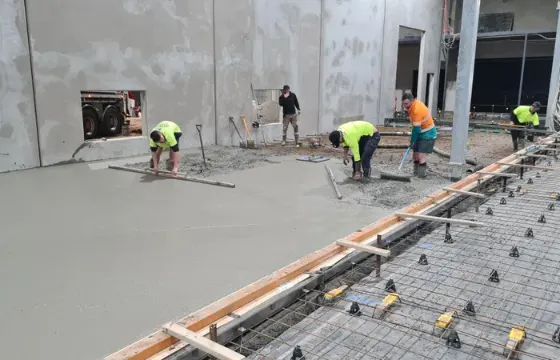
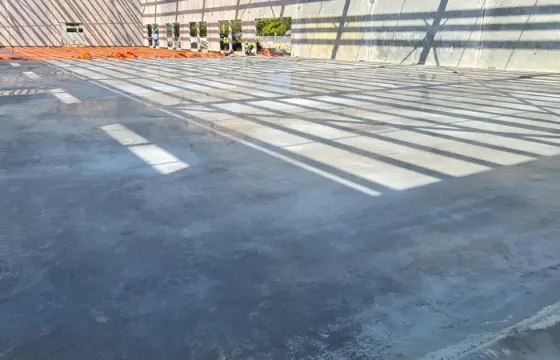

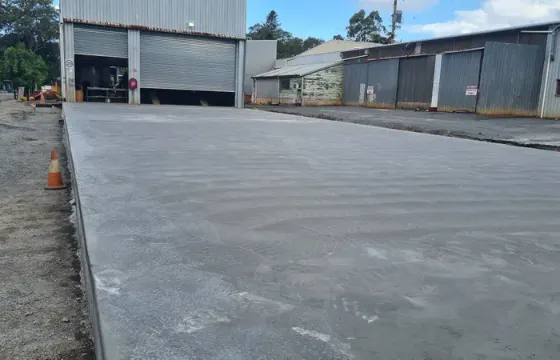
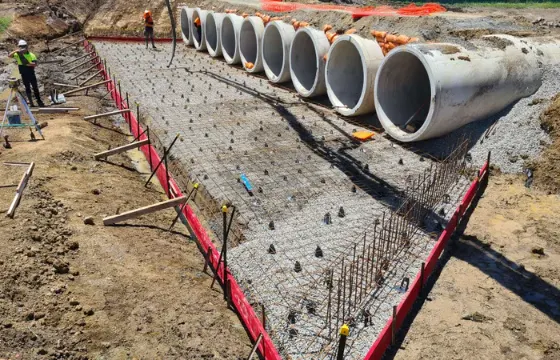
Note: project imagery depicts TSR technology for which McClay Industries Pty Ltd was previously the Principal Agent, with direct oversight of all projects shown.
The SteelX range
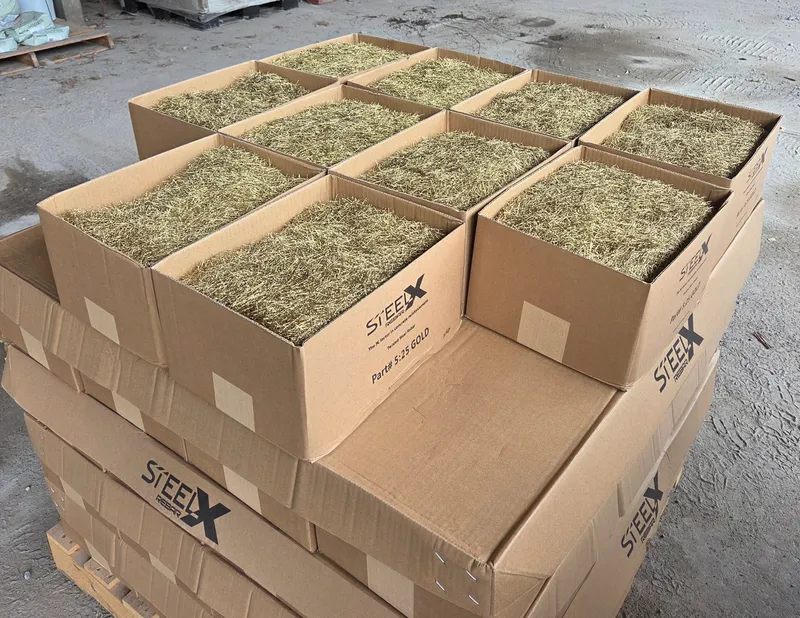
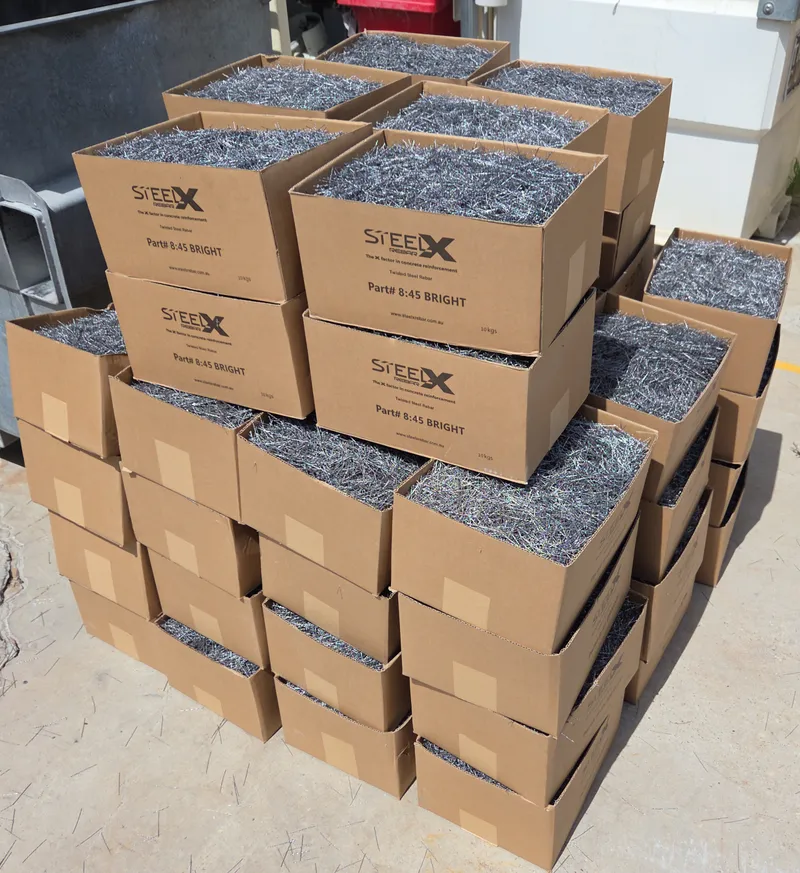
Dosed at the truck. Every truck on record.
We dose SteelX into each truck on site with a fibre blower — at the specified kg/m³, in front of your crew. Every load is logged in QA McClay, so you can prove what went in to your engineer, certifier or client years after handover. Available across South East Queensland.
Twisted steel rebar.
Not steel fibre.
Steel fibre enhanced concrete is not a new concept — many shapes, lengths and tensile strengths have been added to concrete for decades, so many incorrectly assume SteelX is just ‘another’ steel fibre. The failure mechanism says otherwise.
Torsion, not friction
SteelX 5:25 is a Twisted Steel Reinforcement (TSR) with a unique ability to bond with concrete due to its twisted shape, providing a torsional anchorage that engages before the concrete fails and creates a true composite with the concrete.
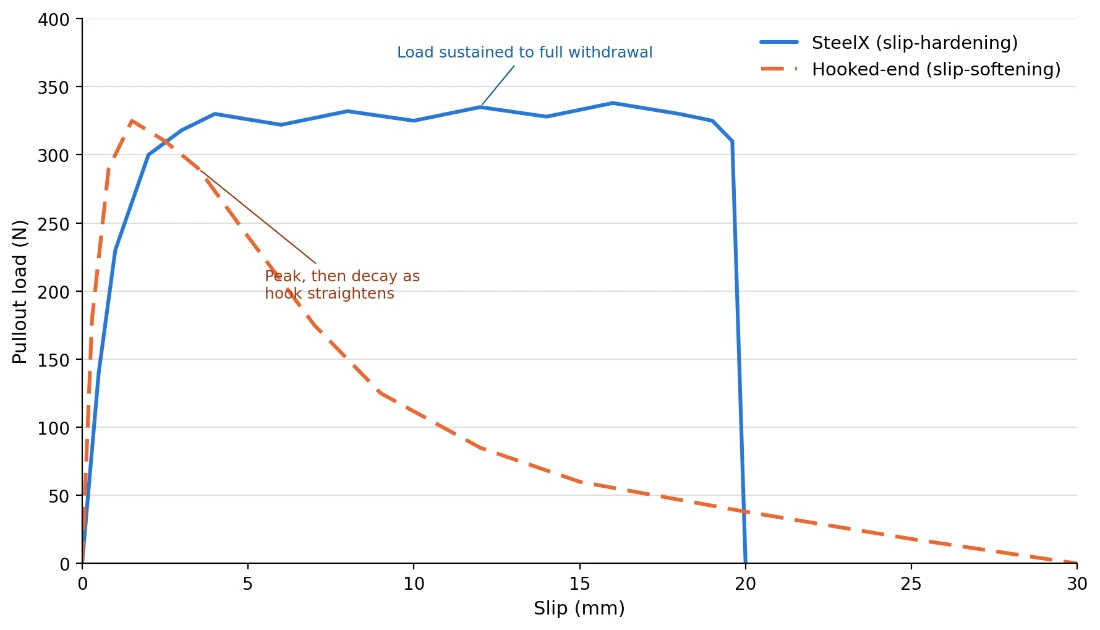
Each piece bonds to the matrix over its full length and must untwist as it pulls out. That is significantly different from traditional steel fibres, where pullout is governed by friction.
The torsional pullout mechanism requires considerably more force — 2 to 5 times more than steel fibres — and remains consistent over roughly 80–90% of the embedded length.
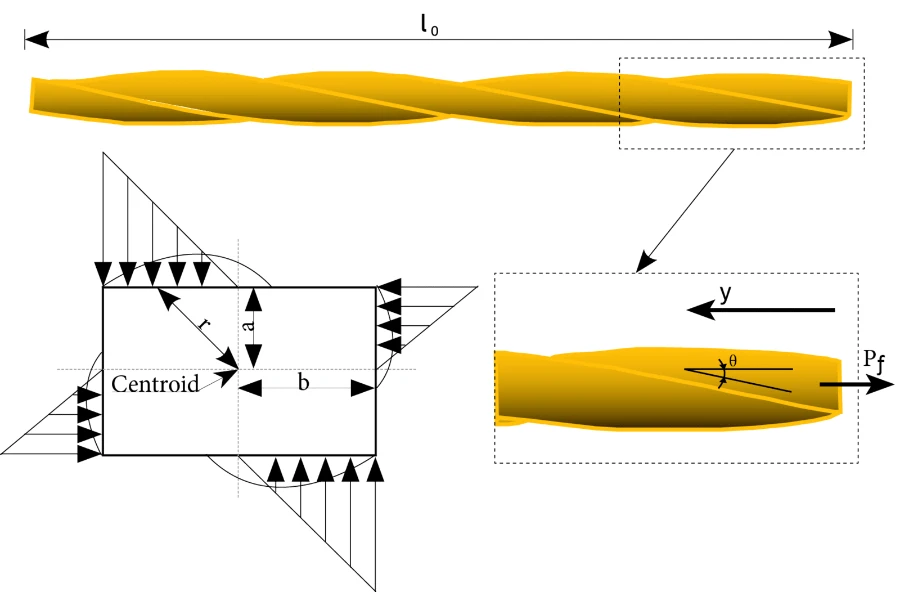
Watch a strand untwist as it pulls out
Open full screen →What it does to the concrete
Because of the superior bond, the material properties of the concrete itself improve before a dominant crack ever forms. That is proactive reinforcement — and it is measurable.
Tensile splitting data from a TSR product published in “Mechanical, durability and microstructural characteristics of ultra-high-strength self-compacting concrete incorporating steel fibers”, Amr S. El-Dieb, 1 April 2009.
Designing with it
Run your SteelX designs in McClay’s own design tool — work through reinforcement ratios and slab thickness, and get a SteelX dosage you can put on the drawings.
Easiest product on the market to add, mix and record
Typically a mix design requires minimal to no alteration. A mix that performs well without SteelX will, in most instances, perform well with it. Complex jobs — jointless slabs, restrained elements, critical crack widths — get a free mix design review.
Request a mix design review →Slabs on the ground, not renders
Every photograph here is a McClay-supplied SteelX project. Tap any image for the specification that was poured.
Project imagery and data as recorded by McClay Industries Pty Ltd. Some earlier imagery depicts TSR technology for which McClay Industries was previously the Principal Agent, with direct oversight of all projects shown.
{{ lightbox.description }}
Blown in at the truck. Every truck on record.
McClay doses SteelX into each truck on site with a fibre blower. It goes in at the specified kg/m³, in front of your crew, and every truck is recorded in QA McClay — the app our operators use on every pour. The on-site service is available across South East Queensland.
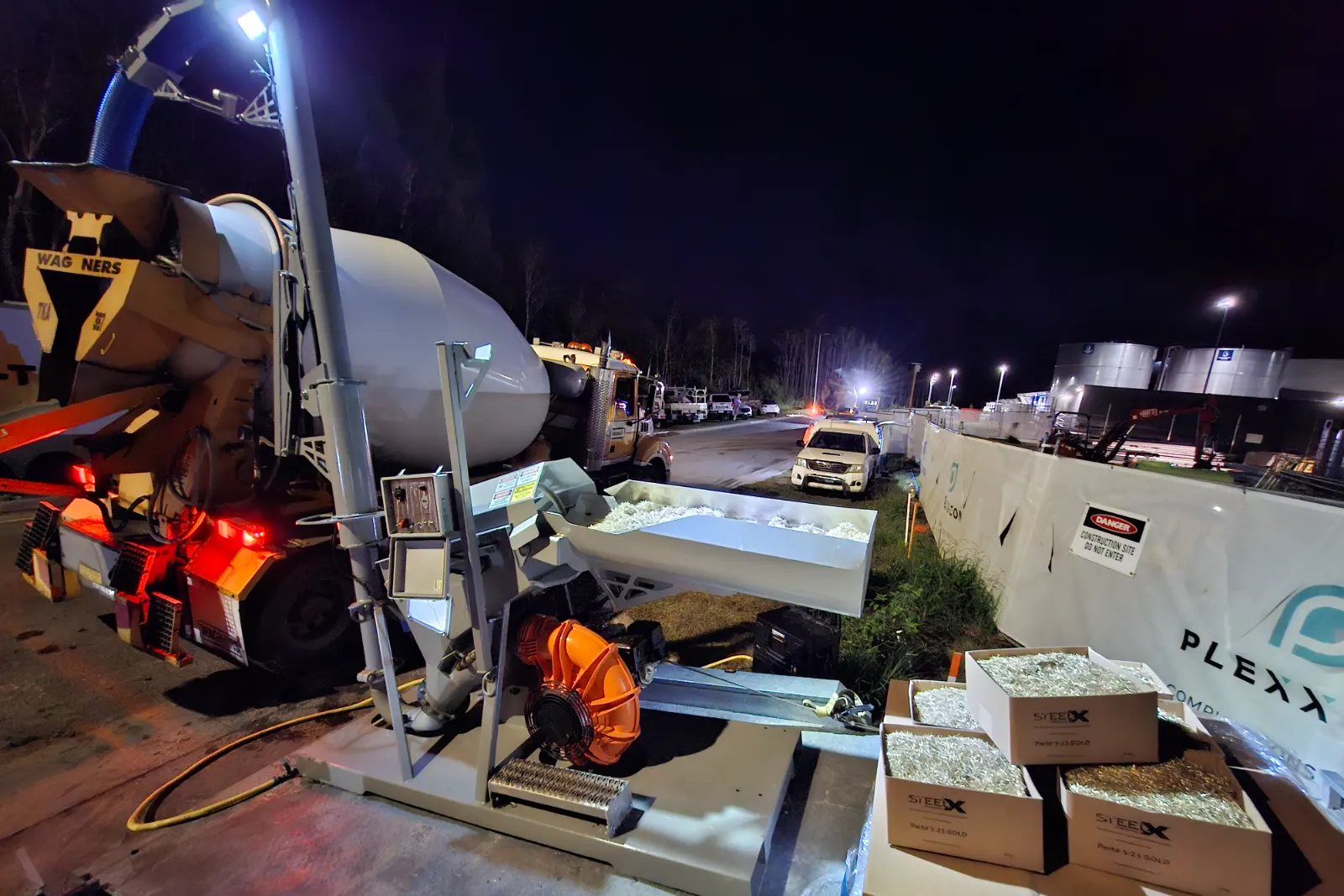
Four steps, every truck
Why dose SteelX on site
“It was dosed correctly” becomes a record
A per-truck record you can produce at any time — to an engineer, a certifier, or a client years after handover.
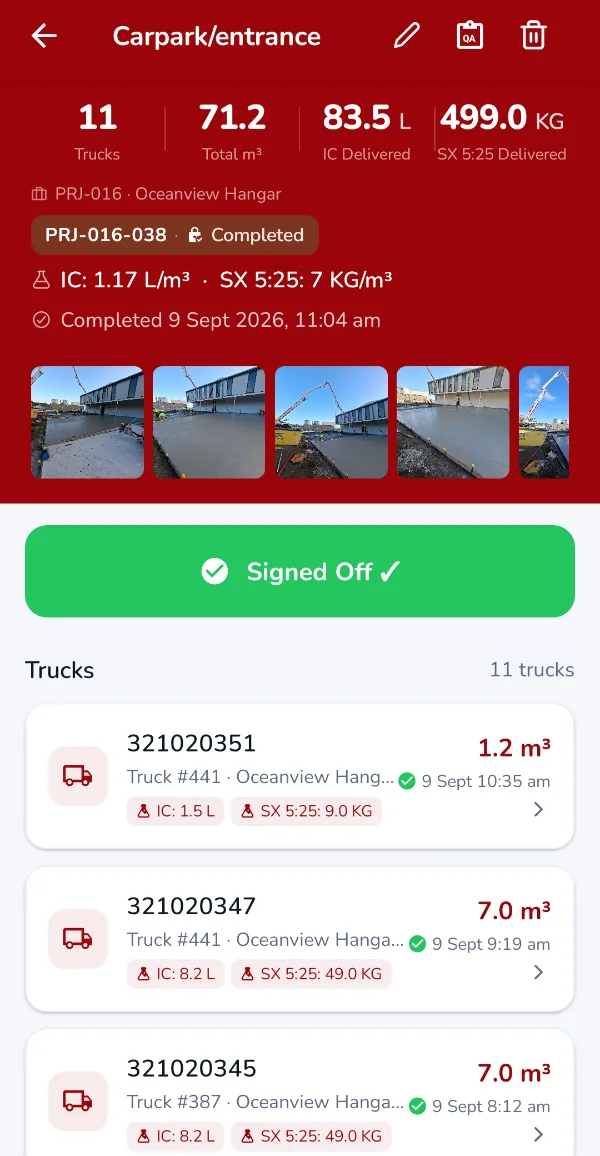
Plant dosing versus McClay on-site dosing
If your plant is dosing it
Outside South East Queensland, or wherever SteelX is added at the batch plant rather than on site, this is the approved method. Print it for the loader, and record every batch on the SteelX Batching Register.
Download batching method PDFAsk for a sample pour report
The same document you’d receive after your pour. Accept on-site dosing when you sign your SteelX quotation — available for pours across South East Queensland.
Data you can put your name to
Design intent relies on predictable materials. SteelX is specified with third-party test data, a published design method and real project precedent — so it survives peer review and value-engineering both.
Where conventional reinforcement lets the design down
Mesh and bar are designed on paper to sit in the right place and control cracks. On site they get walked into the subgrade, lose cover, and only start working once the concrete has already cracked. Traditional steel fibre was meant to fix that — and brought its own problems.
Design support, not sales support
The design basis
SteelX is designed against published standards and third-party test methods — not proprietary claims. These are the references your specification and your peer reviewer will both recognise.
How a project runs
From first call to the pour. Most of the work happens before anyone orders concrete.
The engineering platform
Design tools, slab thickness calculators and specification templates for SteelX systems — mesh free, joint free and watertight. Free for specifying engineers.
micd.mcclay.au →Earn CPD points at your desk
A concise, real-world presentation your team can apply to current projects. We come to your office and schedule around your workflow.
Poured, finished, still flat
Every claim on this site traces to a delivered project. Here’s the evidence base — what was specified, what was replaced, and what the slab did afterwards.
What SteelX replaced
Taken from the specifications as issued, against the designs they replaced.
The 28, by application family
The same five families used on the project index — each project counted once.
Jobs that set the precedent
Project data as recorded by McClay Industries Pty Ltd. Some earlier project imagery depicts TSR technology for which McClay Industries was previously the Principal Agent, with direct oversight of all projects shown.
Two products. One decision.
Both are twisted steel reinforcement, both mix straight into the truck. The 5:25 works before the concrete cracks; the 8:45 works after it does. Most projects use one — some use both.
The workhorse. Brass coated twisted steel rebar that mixes straight into fresh concrete, bonding over its full length. Works proactively — it lifts the concrete’s own properties before a crack ever forms.
The heavy-duty profile. Longer and thicker, for structural and high-load work where the design case is what happens after the concrete cracks. Delivers stable post-crack capacity you can design against.
Which one do I specify?
The short version: if you’re removing mesh from a slab, it’s the 5:25. If you’re replacing bar in a structural element, it’s the 8:45.
Dosage by application
Indicative rates drawn from delivered projects. Final dosage always comes from a project-specific design — send us the drawings and we’ll do it.
Technical downloads
Everything you need to specify, batch and place SteelX. Request any document and we’ll send the current revision the same day.
Technical data sheets and safety data sheets are issued on request so you always receive the current revision. Specifications are subject to change — confirm against the issued document before it goes on drawings.
We dose it on site. You get the record.
Five ways SteelX takes steel off site
Every project below is real, with the dosage and the slab spec that was actually poured. Filter by what you’re building.
The Liberty™ Slab. All saw cut joints removed and 20% off the thickness, using 18 kg/m³ SteelX 5:25 with conventional mesh.
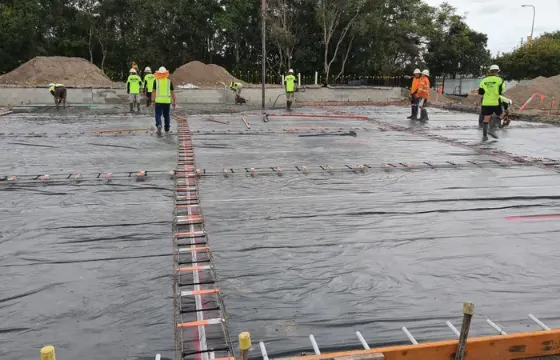
Mesh replaced outright on jointed designs, using the tensile resistance method from CCAA T48. No cutting, tying, chairs or cover risk.
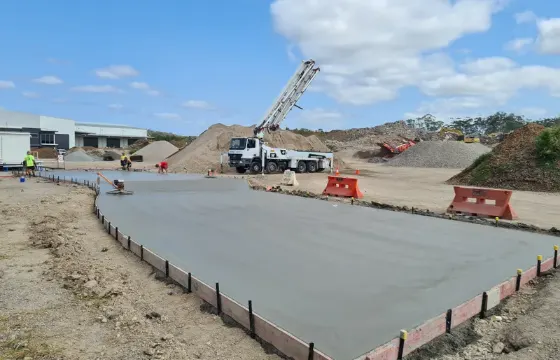
Mesh stays, bar goes — or the layers come down. Where a slab still needs mesh for its design, SteelX removes the bar and the doubled-up layers around it.
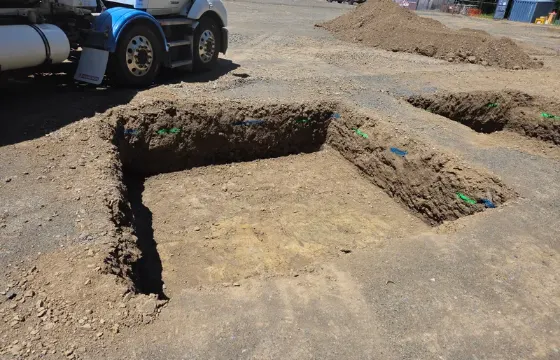
Cages gone from strip footings, pad footings, pile caps and bored piers. Dig and pour, with steel kept only at peak stress.
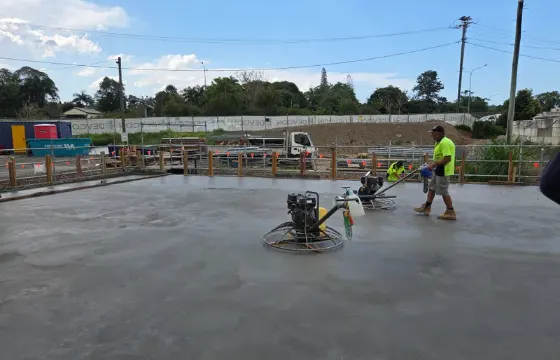
Crack widths held below 0.10 mm — the AS 3735 watertightness threshold — so membranes and tanking come off the job entirely.
Project reference index
{{ projCount }} SteelX projects, as poured. Dosages, mesh and thicknesses are the real numbers.
Project data as recorded by McClay Industries Pty Ltd. Some imagery depicts TSR technology for which McClay Industries was previously the Principal Agent, with direct oversight of all projects shown.
The SteelX Liberty™ Slab
A jointless slab system that eliminates saw cut joints entirely while reducing slab thickness by 20%. 18 kg/m³ of SteelX 5:25 with conventional mesh redistributes shrinkage stress into smaller, tightly spaced cracks — instead of wide random cracks at joints.
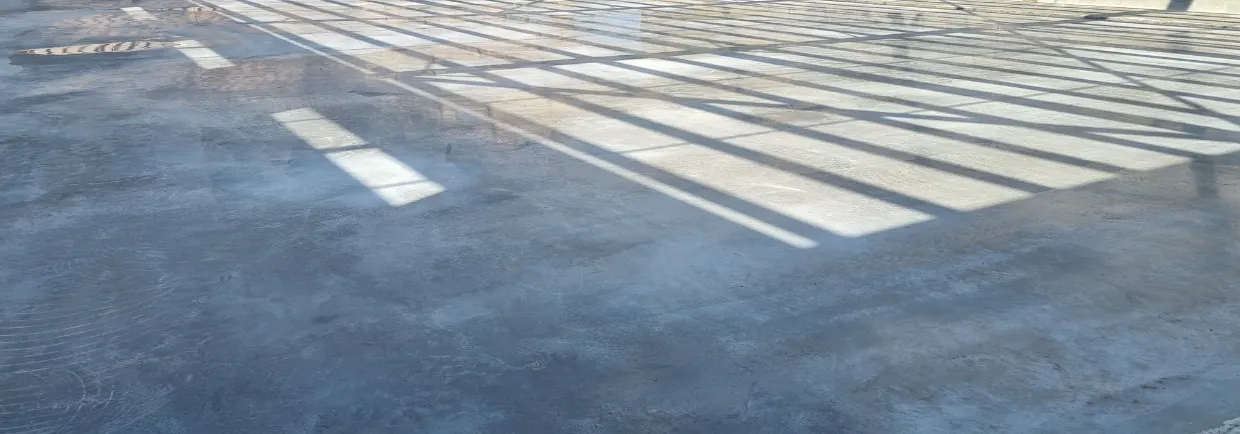
Joints are the weakest point in any slab
Saw cut joints curl, spall and deteriorate under forklift traffic, requiring costly ongoing maintenance. Traditional joint spacing of 4–6 metres means dozens of joints per floor — each one a potential failure point that impacts floor flatness, hygiene and durability.
Joint sealing, repair and re-levelling represent significant lifetime costs.
A hybrid reinforcement system
The Liberty™ Slab eliminates all saw cut joints using 18 kg/m³ of SteelX 5:25 combined with conventional mesh at a 0.15–0.25% steel ratio. The design philosophy rests on three foundations:
What you get
Design to pour, step by step
Ideal for
What we provide
Make concrete better
SteelX Rebar is a McClay Industries brand. McClay has worked with twisted steel reinforcement in Australia since 2009, and launched SteelX in 2020.

Who we are
McClay Industries sources and supplies concrete technologies that change how structures are designed and built in Australia — then stays on the job to make sure they perform.
SteelX is the reinforcement side of that work: twisted steel that mixes straight into the concrete, replacing mesh and bar with something safer, faster and stronger. McClay also supplies E5 Nano-silica for internal curing.
More than a supplier
Our journey
How we work
Send us the drawings.
We’ll send back the numbers.
A free project analysis tells you what SteelX takes off the job — the mesh, the rebar, the thickness, the weeks — and what it costs. No obligation, and we’ll tell you if it isn’t the right fit.
Request a free project analysis
The more you tell us, the more useful the answer. Fields marked with a gold rule are the ones we really need. What you type is saved as you go, so we can follow up if you’re cut off before sending (privacy policy).
We’ll come back to you within one business day. If it’s urgent, call 1300 443 549 and ask for the SteelX team.
What happens next
{{ stubTitle }}
This page is next in the build. The homepage sets the system — type, colour, grid and component set — and the inner pages will follow it.
Get a free analysis on your project
Send us your drawings and we’ll show you what comes out: the mesh, the rebar, the thickness, the weeks.